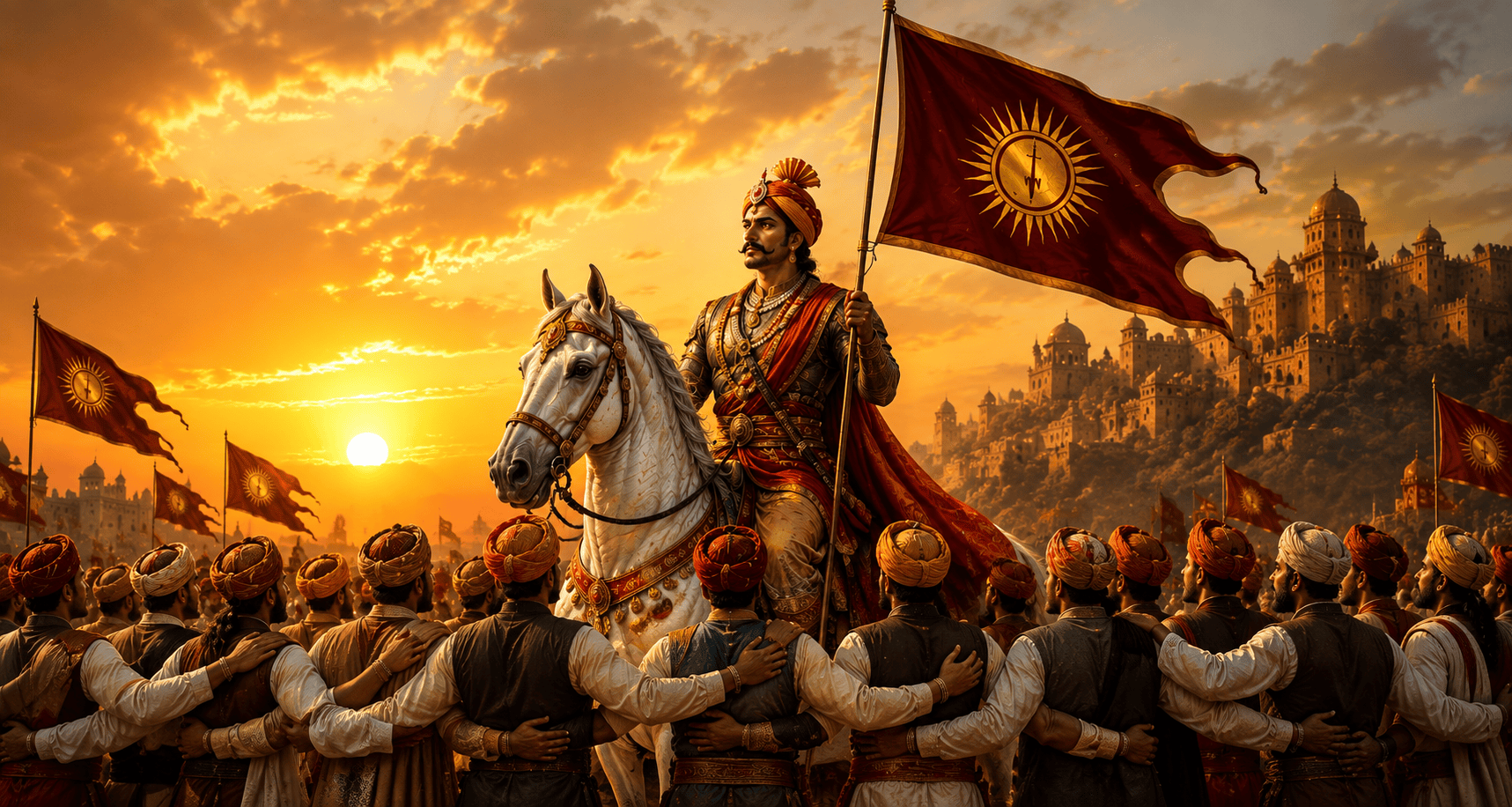
Alwar, situated in north-eastern Rajasthan, has a long and complex history extending from the ancient traditions associated with the Matsya region to the formation of modern Rajasthan. Its strategic location near the Aravalli hills and the Delhi region made it an important political and military zone throughout medieval and early modern Indian history.
The foundation of the modern Alwar State is closely associated with the Naruka branch of the Kachhwaha Rajputs. Historical sources identify the rulers of Alwar with the Naruka lineage and connect their earlier political base with the estate of Macheri. The rise of Rao Raja Pratap Singh Naruka marked a decisive turning point in the history of the region.
Born in 1740, Pratap Singh established himself as an important military and political figure. His association with the Mughal commander Mirza Najaf Khan strengthened his position, and historical records state that Mughal Emperor Shah Alam II recognized his status by granting him the title of Rao Raja and a substantial mansab.
The decisive moment came in 1775, when Pratap Singh expanded his authority and took control of the famous Alwar fort. On 25 December 1775, he entered the fort, shifted his capital from Macheri to Alwar and established the Alwar State. The IGNCA historical account specifically records this event as the foundation of Alwar State.
Pratap Singh subsequently expanded his authority over several surrounding areas, strengthening the political base of the new state. His reign represents the transformation of the Naruka power of Macheri into the independent political entity that became the Alwar princely state. Academic research published by Cambridge University Press identifies 1775 as the formative point for the Alwar state and examines the development of its Naruka jagir system.
Pratap Singh died in 1791 and was succeeded by his adopted son Rao Raja Bakhtawar Singh. During his rule, Alwar continued to consolidate its territory. Historical accounts also record his cooperation with the British during the Maratha conflicts.
During the nineteenth century, Alwar became an important princely state within British Rajputana. Its political administration, jagirdari system and relationship between the ruling house and local Rajput lineages evolved under British paramountcy. Modern historical research has examined these developments in detail, particularly for the period from 1775 onward.
After Indian independence, Alwar became part of the process of political integration of the former princely states. On 17 March 1948, Alwar joined Bharatpur, Dholpur and Karauli to form the Matsya Union. According to the Rajasthan Legislative Assembly, the Matsya Union was later merged with Greater Rajasthan on 15 May 1949.
The history of Alwar therefore represents a remarkable journey involving the ancient Matsya tradition, the Aravalli region, the Kachhwaha–Naruka Rajputs, Macheri, Mughal political authority, Bharatpur and Maratha power, British Rajputana, and finally the integration of princely states into modern Rajasthan.
Major Historical Sources:
Rajasthan Legislative Assembly – History of Legislature in Rajasthan.
IGNCA – Rajasthan: Alwar – Historical Background and Establishment.
Edward S. Haynes – Imperial Impact on Rajputana: The Case of Alwar, 1775–1850, Modern Asian Studies, Cambridge University Press.
The Imperial Durbar Album of the Indian Princes, Chiefs and Zamindars – Alwar and Naruka lineage.
Imperial Gazetteer of India – Historical account of Alwar State.
The foundation of the modern Alwar State is closely associated with the Naruka branch of the Kachhwaha Rajputs. Historical sources identify the rulers of Alwar with the Naruka lineage and connect their earlier political base with the estate of Macheri. The rise of Rao Raja Pratap Singh Naruka marked a decisive turning point in the history of the region.
Born in 1740, Pratap Singh established himself as an important military and political figure. His association with the Mughal commander Mirza Najaf Khan strengthened his position, and historical records state that Mughal Emperor Shah Alam II recognized his status by granting him the title of Rao Raja and a substantial mansab.
The decisive moment came in 1775, when Pratap Singh expanded his authority and took control of the famous Alwar fort. On 25 December 1775, he entered the fort, shifted his capital from Macheri to Alwar and established the Alwar State. The IGNCA historical account specifically records this event as the foundation of Alwar State.
Pratap Singh subsequently expanded his authority over several surrounding areas, strengthening the political base of the new state. His reign represents the transformation of the Naruka power of Macheri into the independent political entity that became the Alwar princely state. Academic research published by Cambridge University Press identifies 1775 as the formative point for the Alwar state and examines the development of its Naruka jagir system.
Pratap Singh died in 1791 and was succeeded by his adopted son Rao Raja Bakhtawar Singh. During his rule, Alwar continued to consolidate its territory. Historical accounts also record his cooperation with the British during the Maratha conflicts.
During the nineteenth century, Alwar became an important princely state within British Rajputana. Its political administration, jagirdari system and relationship between the ruling house and local Rajput lineages evolved under British paramountcy. Modern historical research has examined these developments in detail, particularly for the period from 1775 onward.
After Indian independence, Alwar became part of the process of political integration of the former princely states. On 17 March 1948, Alwar joined Bharatpur, Dholpur and Karauli to form the Matsya Union. According to the Rajasthan Legislative Assembly, the Matsya Union was later merged with Greater Rajasthan on 15 May 1949.
The history of Alwar therefore represents a remarkable journey involving the ancient Matsya tradition, the Aravalli region, the Kachhwaha–Naruka Rajputs, Macheri, Mughal political authority, Bharatpur and Maratha power, British Rajputana, and finally the integration of princely states into modern Rajasthan.
Major Historical Sources:
Rajasthan Legislative Assembly – History of Legislature in Rajasthan.
IGNCA – Rajasthan: Alwar – Historical Background and Establishment.
Edward S. Haynes – Imperial Impact on Rajputana: The Case of Alwar, 1775–1850, Modern Asian Studies, Cambridge University Press.
The Imperial Durbar Album of the Indian Princes, Chiefs and Zamindars – Alwar and Naruka lineage.
Imperial Gazetteer of India – Historical account of Alwar State.
हिंदी
अलवर का राजपूताना इतिहास
अलवर राजस्थान के उत्तर-पूर्वी भाग में स्थित एक ऐतिहासिक क्षेत्र है, जिसका इतिहास प्राचीन काल से लेकर आधुनिक राजस्थान के निर्माण तक अनेक राजनीतिक और सामाजिक परिवर्तनों से जुड़ा रहा है। प्राचीन परंपराओं में अलवर क्षेत्र को मत्स्य जनपद से जोड़ा जाता है। मध्यकाल में अरावली क्षेत्र और दिल्ली के निकट होने के कारण यह भूभाग विभिन्न राजवंशों और शक्तियों के लिए रणनीतिक रूप से महत्वपूर्ण रहा।
आधुनिक अलवर रियासत के इतिहास में नरूका कछवाहा राजपूतों का विशेष स्थान है। अलवर के शासक कछवाहा वंश की नरूका शाखा से संबंधित थे। ऐतिहासिक अभिलेखों के अनुसार नरूका वंश के राव कल्याण सिंह को जयपुर के शासक से माचेड़ी की जागीर प्राप्त हुई थी। बाद में इसी वंश में राव राजा प्रताप सिंह का उदय हुआ।
राव राजा प्रताप सिंह नरूका का जन्म 1740 में हुआ। उन्होंने जयपुर दरबार में अपनी सैन्य और राजनीतिक योग्यता के कारण महत्वपूर्ण स्थान बनाया। विभिन्न संघर्षों में उनकी भूमिका और मुगल सेनापति मिर्जा नजफ खाँ के साथ सहयोग के बाद मुगल सम्राट शाह आलम द्वितीय ने उन्हें राव राजा की उपाधि और मनसब प्रदान किया। राजस्थान के ऐतिहासिक स्रोतों में 1774 में उनकी राजनीतिक स्थिति मजबूत होने का उल्लेख मिलता है।
इसके बाद प्रताप सिंह ने अपने प्रभाव का विस्तार किया। 25 दिसंबर 1775 को उन्होंने अलवर के प्रसिद्ध दुर्ग पर अधिकार किया और माचेड़ी के स्थान पर अलवर को अपनी राजधानी बनाकर अलवर राज्य की स्थापना की। राजस्थान से संबंधित IGNCA के ऐतिहासिक विवरण में इस घटना का स्पष्ट उल्लेख मिलता है।
अलवर राज्य के विस्तार में प्रताप सिंह ने आसपास के अनेक क्षेत्रों पर अपना प्रभाव स्थापित किया। अलवर, राजगढ़, बानसूर, थानागाजी और आसपास के क्षेत्रों में उनकी राजनीतिक एवं सैन्य शक्ति मजबूत हुई। Cambridge University Press में प्रकाशित Edward S. Haynes के शोध के अनुसार 1775 के बाद अलवर राज्य और उसकी नरूका जागीर व्यवस्था ने राजपूताना की बदलती राजनीतिक संरचना में महत्वपूर्ण भूमिका निभाई।
प्रताप सिंह का निधन 1791 में हुआ। उनके बाद उनके दत्तक उत्तराधिकारी राव राजा बख्तावर सिंह ने शासन संभाला और अलवर राज्य के विस्तार को आगे बढ़ाया। ब्रिटिशकालीन Imperial Durbar Album में भी प्रताप सिंह के बाद बख्तावर सिंह द्वारा शेष क्षेत्रों पर अधिकार मजबूत करने तथा मराठा युद्धों के दौरान अंग्रेजों के साथ सहयोग का उल्लेख मिलता है।
19वीं शताब्दी में अलवर राजपूताना की प्रमुख रियासतों में शामिल रहा। ब्रिटिश राजनीतिक व्यवस्था के अंतर्गत अलवर की राजसत्ता, जागीर व्यवस्था और स्थानीय राजपूत राजनीतिक संरचनाओं में महत्वपूर्ण परिवर्तन हुए। आधुनिक academic research में 1775 से 1850 तक अलवर पर साम्राज्यवादी प्रभाव तथा नरूका जागीरदारों और राज्य के संबंधों का विस्तृत अध्ययन मिलता है।
स्वतंत्रता के बाद रियासतों के एकीकरण की प्रक्रिया में अलवर की महत्वपूर्ण भूमिका रही। 17 मार्च 1948 को अलवर, भरतपुर, धौलपुर और करौली को मिलाकर मत्स्य संघ बनाया गया। राजस्थान विधानसभा के आधिकारिक इतिहास के अनुसार बाद में मत्स्य संघ का विलय ग्रेटर राजस्थान में 15 मई 1949 को हुआ।
इस प्रकार अलवर का इतिहास केवल एक रियासत के निर्माण की कहानी नहीं है, बल्कि मत्स्य परंपरा, अरावली क्षेत्र, कछवाहा–नरूका राजपूतों, माचेड़ी ठिकाने, मुगल सत्ता, भरतपुर एवं मराठा शक्ति, ब्रिटिश राजपूताना और स्वतंत्र भारत में राजस्थान के एकीकरण की दीर्घ ऐतिहासिक यात्रा है।
प्रमुख ऐतिहासिक स्रोत:
Rajasthan Legislative Assembly – History of Legislature in Rajasthan.
IGNCA – Rajasthan: Alwar – Historical Background & Establishment.
Edward S. Haynes, Imperial Impact on Rajputana: The Case of Alwar, 1775–1850, Modern Asian Studies, Cambridge University Press.
The Imperial Durbar Album of the Indian Princes, Chiefs and Zamindars – Alwar/Naruka lineage.
Imperial Gazetteer of India – Alwar State historical account.
अलवर राजस्थान के उत्तर-पूर्वी भाग में स्थित एक ऐतिहासिक क्षेत्र है, जिसका इतिहास प्राचीन काल से लेकर आधुनिक राजस्थान के निर्माण तक अनेक राजनीतिक और सामाजिक परिवर्तनों से जुड़ा रहा है। प्राचीन परंपराओं में अलवर क्षेत्र को मत्स्य जनपद से जोड़ा जाता है। मध्यकाल में अरावली क्षेत्र और दिल्ली के निकट होने के कारण यह भूभाग विभिन्न राजवंशों और शक्तियों के लिए रणनीतिक रूप से महत्वपूर्ण रहा।
आधुनिक अलवर रियासत के इतिहास में नरूका कछवाहा राजपूतों का विशेष स्थान है। अलवर के शासक कछवाहा वंश की नरूका शाखा से संबंधित थे। ऐतिहासिक अभिलेखों के अनुसार नरूका वंश के राव कल्याण सिंह को जयपुर के शासक से माचेड़ी की जागीर प्राप्त हुई थी। बाद में इसी वंश में राव राजा प्रताप सिंह का उदय हुआ।
राव राजा प्रताप सिंह नरूका का जन्म 1740 में हुआ। उन्होंने जयपुर दरबार में अपनी सैन्य और राजनीतिक योग्यता के कारण महत्वपूर्ण स्थान बनाया। विभिन्न संघर्षों में उनकी भूमिका और मुगल सेनापति मिर्जा नजफ खाँ के साथ सहयोग के बाद मुगल सम्राट शाह आलम द्वितीय ने उन्हें राव राजा की उपाधि और मनसब प्रदान किया। राजस्थान के ऐतिहासिक स्रोतों में 1774 में उनकी राजनीतिक स्थिति मजबूत होने का उल्लेख मिलता है।
इसके बाद प्रताप सिंह ने अपने प्रभाव का विस्तार किया। 25 दिसंबर 1775 को उन्होंने अलवर के प्रसिद्ध दुर्ग पर अधिकार किया और माचेड़ी के स्थान पर अलवर को अपनी राजधानी बनाकर अलवर राज्य की स्थापना की। राजस्थान से संबंधित IGNCA के ऐतिहासिक विवरण में इस घटना का स्पष्ट उल्लेख मिलता है।
अलवर राज्य के विस्तार में प्रताप सिंह ने आसपास के अनेक क्षेत्रों पर अपना प्रभाव स्थापित किया। अलवर, राजगढ़, बानसूर, थानागाजी और आसपास के क्षेत्रों में उनकी राजनीतिक एवं सैन्य शक्ति मजबूत हुई। Cambridge University Press में प्रकाशित Edward S. Haynes के शोध के अनुसार 1775 के बाद अलवर राज्य और उसकी नरूका जागीर व्यवस्था ने राजपूताना की बदलती राजनीतिक संरचना में महत्वपूर्ण भूमिका निभाई।
प्रताप सिंह का निधन 1791 में हुआ। उनके बाद उनके दत्तक उत्तराधिकारी राव राजा बख्तावर सिंह ने शासन संभाला और अलवर राज्य के विस्तार को आगे बढ़ाया। ब्रिटिशकालीन Imperial Durbar Album में भी प्रताप सिंह के बाद बख्तावर सिंह द्वारा शेष क्षेत्रों पर अधिकार मजबूत करने तथा मराठा युद्धों के दौरान अंग्रेजों के साथ सहयोग का उल्लेख मिलता है।
19वीं शताब्दी में अलवर राजपूताना की प्रमुख रियासतों में शामिल रहा। ब्रिटिश राजनीतिक व्यवस्था के अंतर्गत अलवर की राजसत्ता, जागीर व्यवस्था और स्थानीय राजपूत राजनीतिक संरचनाओं में महत्वपूर्ण परिवर्तन हुए। आधुनिक academic research में 1775 से 1850 तक अलवर पर साम्राज्यवादी प्रभाव तथा नरूका जागीरदारों और राज्य के संबंधों का विस्तृत अध्ययन मिलता है।
स्वतंत्रता के बाद रियासतों के एकीकरण की प्रक्रिया में अलवर की महत्वपूर्ण भूमिका रही। 17 मार्च 1948 को अलवर, भरतपुर, धौलपुर और करौली को मिलाकर मत्स्य संघ बनाया गया। राजस्थान विधानसभा के आधिकारिक इतिहास के अनुसार बाद में मत्स्य संघ का विलय ग्रेटर राजस्थान में 15 मई 1949 को हुआ।
इस प्रकार अलवर का इतिहास केवल एक रियासत के निर्माण की कहानी नहीं है, बल्कि मत्स्य परंपरा, अरावली क्षेत्र, कछवाहा–नरूका राजपूतों, माचेड़ी ठिकाने, मुगल सत्ता, भरतपुर एवं मराठा शक्ति, ब्रिटिश राजपूताना और स्वतंत्र भारत में राजस्थान के एकीकरण की दीर्घ ऐतिहासिक यात्रा है।
प्रमुख ऐतिहासिक स्रोत:
Rajasthan Legislative Assembly – History of Legislature in Rajasthan.
IGNCA – Rajasthan: Alwar – Historical Background & Establishment.
Edward S. Haynes, Imperial Impact on Rajputana: The Case of Alwar, 1775–1850, Modern Asian Studies, Cambridge University Press.
The Imperial Durbar Album of the Indian Princes, Chiefs and Zamindars – Alwar/Naruka lineage.
Imperial Gazetteer of India – Alwar State historical account.